Why wool
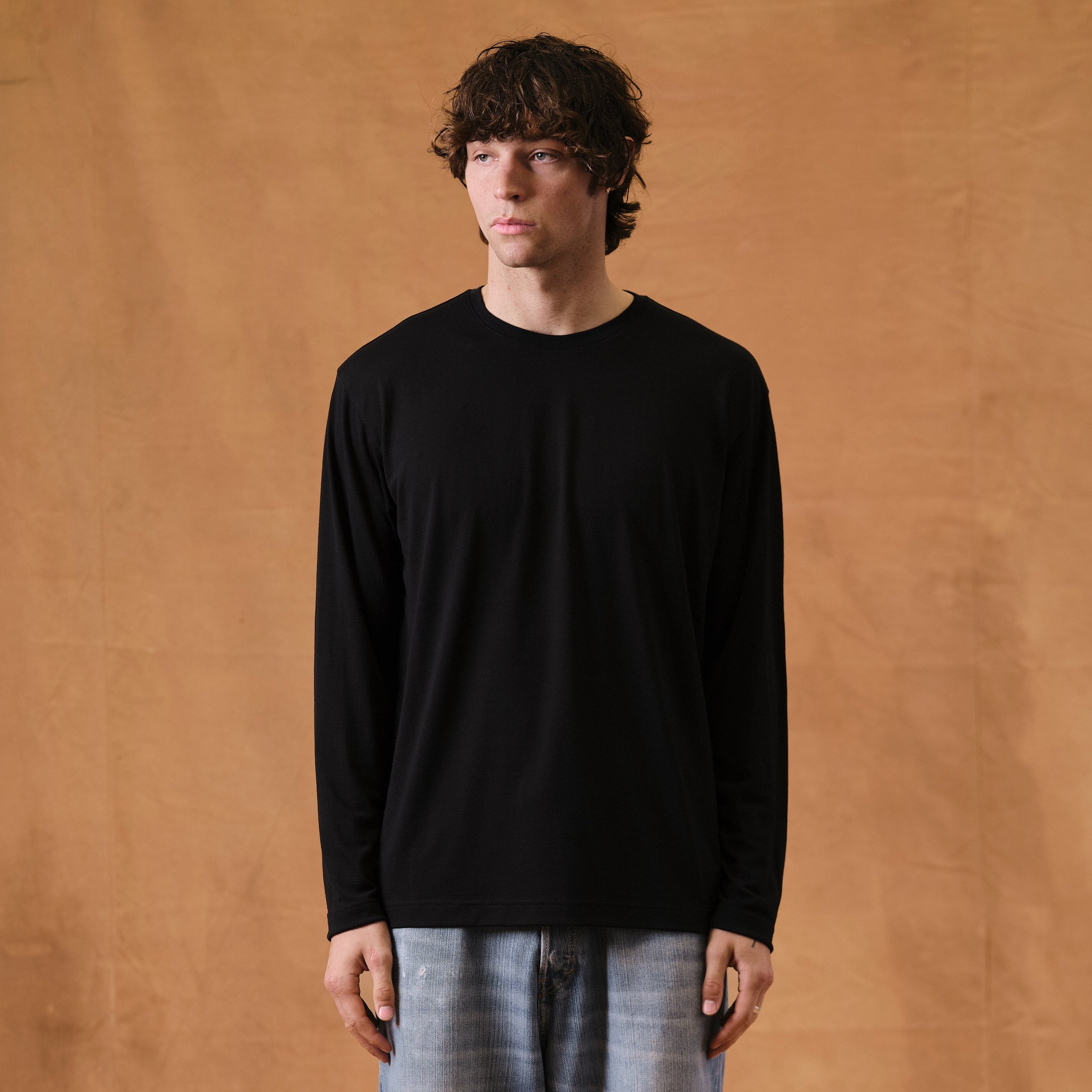
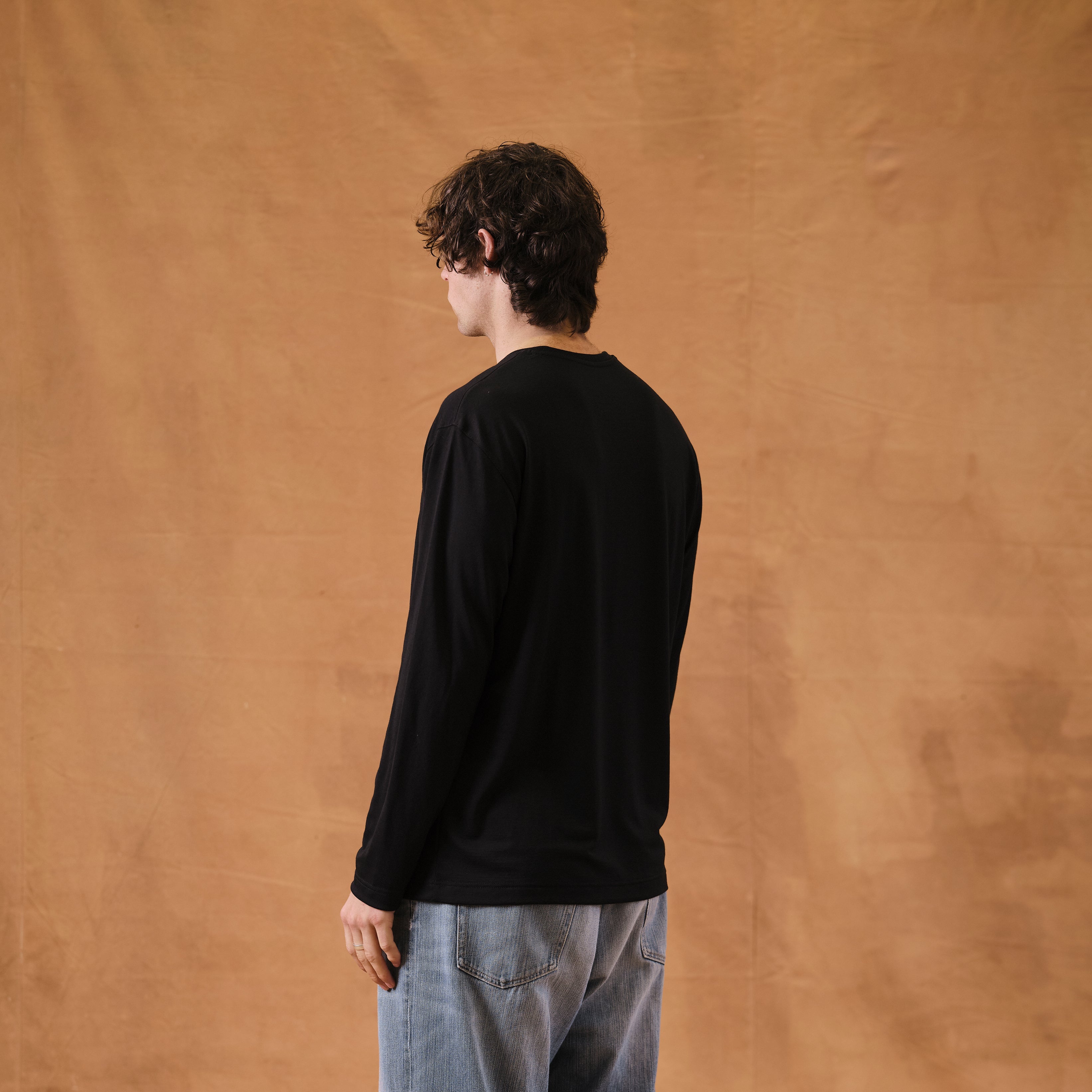
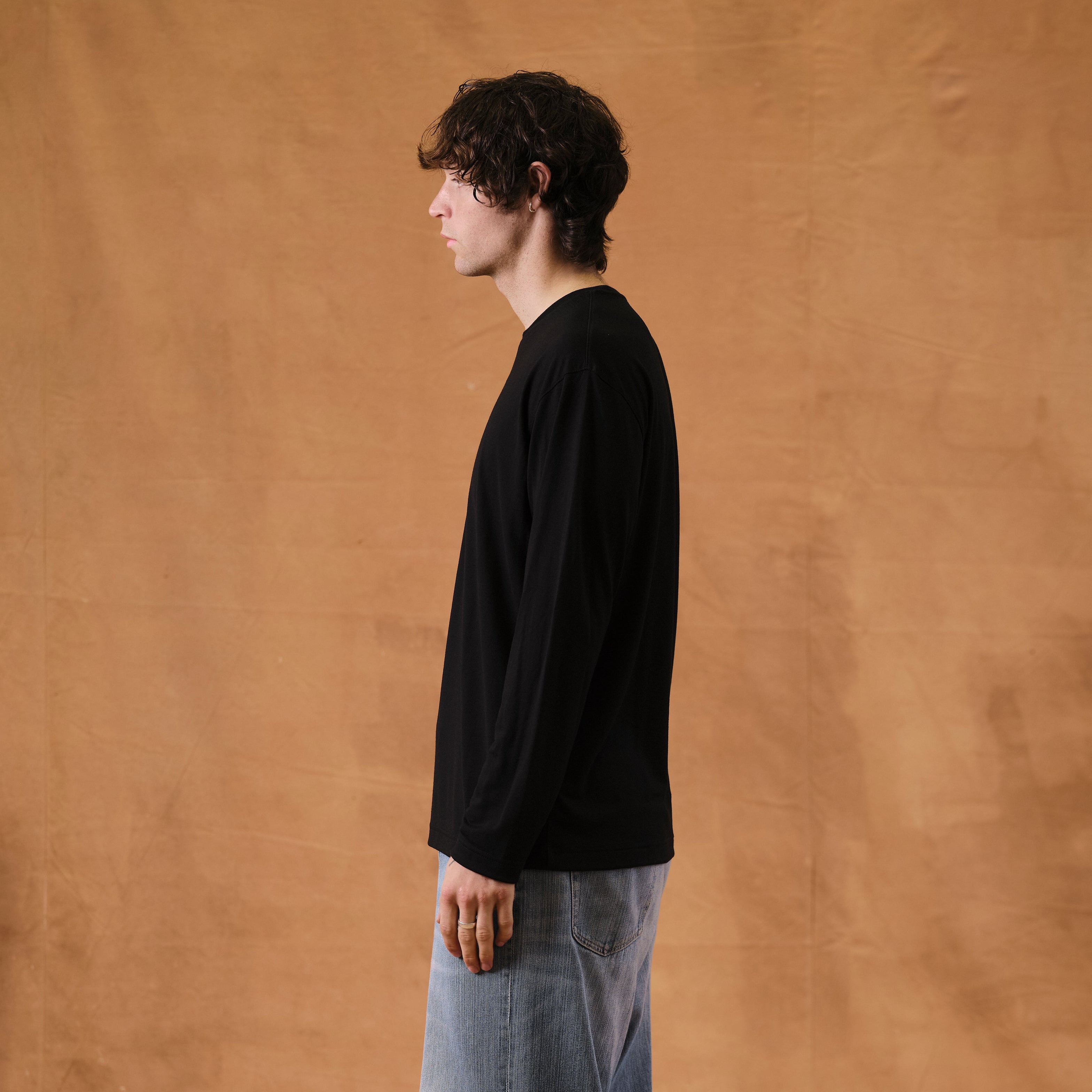
Merino wool is a high-performance natural fiber with properties no synthetic material can fully replicate. It regulates body temperature in warmth and cold, resists odor without chemical treatment, and feels soft directly against the skin — even after a full day of wear.
At Durable Journey, we work exclusively with extra-fine merino at 17.5 microns in diameter. That's at the soft end of the merino spectrum — fine enough to wear next-to-skin, strong enough to last for years.
This page explains how the fiber works, where ours comes from, and why we believe it belongs at the foundation of a thoughtful wardrobe.
Breathability
The fiber's porous structure allows air to move freely through the fabric, which helps prevent overheating and supports natural ventilation during physical activity or in warmer climates.
Moisture Management
Unlike cotton or synthetics, merino wool can absorb up to 35% of its own weight in moisture without feeling wet. It pulls sweat away from the skin and allows it to evaporate slowly, keeping you dry and reducing that clammy feeling.
Odor Resistance
Merino wool is naturally antibacterial. Its fiber surface doesn't support the growth of odor-causing bacteria, so you can wear it for several days without washing — ideal for travel or everyday wear.
Temperature Regulation
Merino wool fibers are naturally crimped, creating tiny insulating air pockets. These help trap body heat when it's cold, and release excess warmth when it's hot. The fibers also respond to changes in humidity, expanding and contracting to help your body maintain a stable temperature.
The Science
The Science Behind The Fiber
Merino wool isn’t a single material — it’s a spectrum. Fiber diameter, measured in microns (µm, one-thousandth of a millimeter), determines everything from softness to drape to durability.
Why 17.5 microns matters
Wool fineness is graded on a recognised industry scale:
- Strong wool: >25 µm — coarse, suited to carpets and outerwear
- Medium wool: 22–25 µm — sweaters, blankets
- Fine wool: 19–22 µm — base layers, mid-weight knitwear
- Superfine wool: 16–19 µm — high-end next-to-skin garments
- Ultrafine wool: <16 µm — luxury suiting, rare and expensive
Our merino sits at 17.5 microns — firmly in the superfine category. That’s the threshold below which most people, including those who think they’re “allergic to wool,” can wear it directly on the skin without the itch sensation associated with coarser wool. The itch isn’t an allergic reaction — it’s the fiber’s diameter physically pressing into nerve endings. Below ~18 µm, the fiber bends instead of pressing.
Crimp — the architecture of warmth
Each merino fiber has a natural, three-dimensional crimp — small, continuous waves along its length. Under a microscope, it looks closer to a spring than a strand of hair. This crimp creates thousands of microscopic air pockets per garment. Air is one of the best insulators known to physics — and merino traps it without weight.
This is why a single thin merino t-shirt feels warmer in cold air, and cooler in hot air, than the same garment in cotton.
Lanolin and keratin — built-in protection
Merino wool is made of keratin, the same protein found in human hair and skin. Two natural properties emerge from this:
- The fiber surface is hygroscopic — it absorbs moisture vapor (not liquid) from your skin and releases it slowly into the air. This is what creates the “dry feeling” even during exertion.
- Keratin’s molecular structure binds and neutralizes the volatile compounds produced by sweat-feeding bacteria. The result: garments that stay fresh after multiple wears, without antibacterial chemical finishes.
Beyond the basics
- UV protection. Merino has a natural UPF (Ultraviolet Protection Factor) typically between 30 and 50, depending on weave density — more than most synthetic activewear.
- Flame resistance. Wool has a high ignition temperature (around 570–600°C) and self-extinguishes when removed from a flame. Cotton ignites at around 250°C.
- Biodegradability. A merino garment in soil breaks down in roughly 6–12 months, returning nutrients (nitrogen, sulfur) to the earth. A polyester equivalent takes hundreds of years.
Comparison
Merino vs. The Alternatives
Most everyday t-shirts fall into one of three categories: cotton, polyester (or other synthetics), or conventional wool. Here’s how merino performs against each.
| Property | Merino Wool | Cotton | Polyester | Regular Wool |
|---|---|---|---|---|
| Softness on skin | Excellent (17.5 µm) | Good when new | Variable | Often itchy |
| Temperature regulation | Excellent | Poor when wet | Poor | Good |
| Moisture management | Absorbs 30%+ of weight | Holds water, slow to dry | Wicks but doesn’t absorb | Absorbs but slow drying |
| Odor resistance | Naturally antibacterial | Bacteria grow easily | Strong odor build-up | Good |
| Wash frequency | Every 5–7 wears | After 1–2 wears | After every wear | Every 3–5 wears |
| UV protection (UPF) | 30–50 natural | 5–10 | Variable | 20–40 |
| Flame behavior | Self-extinguishing | Burns readily | Melts onto skin | Self-extinguishing |
| End of life | Biodegrades 6–12 months | Biodegrades, slow if dyed | 200+ years | Biodegrades |
| Microplastic shedding | None | None | Significant | None |
Why this matters in practice
A cotton t-shirt feels great for the first hour of wear. After exertion, it absorbs sweat, holds onto it, and cools the body in a way that becomes uncomfortable indoors. It also needs washing after almost every wear, accelerating wear-and-tear.
A polyester athletic t-shirt wicks moisture quickly, but its hydrophobic surface gives sweat bacteria nowhere to go but into the fabric itself. After a few wears, the odor becomes permanent. Polyester also sheds microplastics into water systems with every wash.
A regular wool sweater is warm — but the fibers are too coarse for direct skin contact. It’s a layer, not a baselayer.
Merino is the only common fiber that solves all four problems at once: softness, temperature regulation, odor control, and end-of-life impact.
Care & Longevity
Why Merino Lasts
A merino garment is an investment. Treated correctly, ours are built to last 5–10 years of regular wear — which is the principle behind our name.
Wear more, wash less
Because merino is naturally antibacterial, you don’t need to wash it after every wear. We recommend airing it overnight after each use — most odor and moisture dissipates on its own. A typical merino t-shirt only needs washing every 5–7 wears, compared to a cotton equivalent’s 1–2.
That ratio matters. Roughly 25–30% of a garment’s total environmental footprint comes from how it’s washed and dried during its lifetime. Washing less is the single biggest thing you can do to extend a garment’s life and reduce its impact.
How to wash
When you do wash:
- Cold or 30°C wash on a wool/delicate cycle
- Use a mild detergent, ideally one designed for wool
- Avoid fabric softener — it coats the fiber and reduces its natural properties
- Lay flat to dry, away from direct heat or sunlight
- Skip the tumble dryer — heat is the main enemy of wool
We don’t recommend dry cleaning. The solvents are unnecessary for merino, and the chemicals shorten the fiber’s life.
Storing between seasons
Fold rather than hang knitwear — the weight pulls fibers out of shape over time. Store in a breathable cotton bag with cedar or lavender to deter moths. Avoid plastic bags, which trap moisture.
When things go wrong
Pilling is normal in the first few weeks of wear — short fibers working themselves loose. A wool comb or fabric shaver removes them in minutes, and the garment will stop pilling once those fibers are out.
Small holes can be darned. Larger damage we’ll help you address: write to hope@durablejourney.com.
For our complete guide — including detailed wash steps, drying methods, storage between seasons, repair techniques, and troubleshooting — see How to Care for Merino Wool: A Longevity Guide.
Sourcing
Where Our Merino Comes From
Most merino on the global market is anonymous — pooled, traded, and untraceable beyond “Australian” or “New Zealand.” We’ve chosen a different path.
Uruguay, NATIVA, and traceability
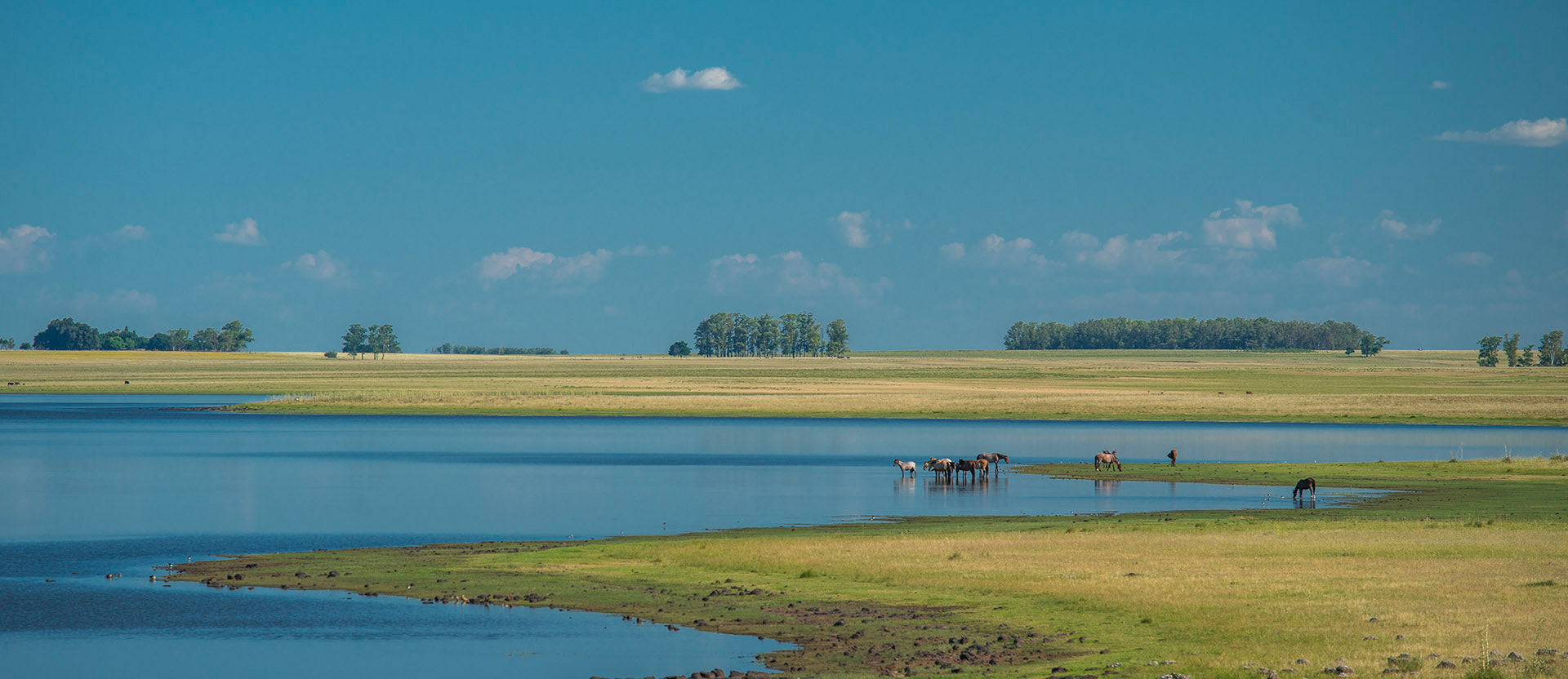
Our wool comes from regenerative family farms in Uruguay, certified under the NATIVA™ program. NATIVA is a strict third-party protocol that audits every step from sheep to finished fabric — covering animal welfare, soil health, water management, and worker conditions.
Each batch of NATIVA wool is tracked via blockchain technology, so we can trace any garment we sell back to the specific farm — and in some cases, the specific flock — it came from.
You can read more about the farm we work with most closely, La Rosada, in our story Meet The Farmers. The same family has stewarded these basaltic pastures for over five generations, preserving more than 90% of the native grasslands and practising regenerative agriculture long before the term existed.
For the full program, see NATIVA™ Regen Program.
Spun in Italy
After shearing and grading in Uruguay, the wool travels to Italy — to one of Europe’s most established merino spinning mills, working with one of Biella’s leading natural dye specialists. Italy has spun fine wool yarn for over a century, and the climate, water, and craftsmanship of the Biella region remain unmatched for fine yarn production.
For undyed pieces (our “Nature” colorway), we skip the dyebath entirely — keeping the wool’s natural off-white color and reducing water and chemical use significantly.
Knit and finished closer to home
Our garments are knitted, dyed where needed, and finished in carefully selected European workshops. We choose partners by craftsmanship and standards — never by lowest price.
The result is a supply chain that is intentionally short, transparent, and built on long-term relationships. If you’d like to understand more about how we develop products, see Product Innovation.
Frequently Asked Questions
No — not at the fineness we use. The itch sensation associated with traditional wool comes from fiber diameter, not from an allergy. Fibers above roughly 22 microns press into nerve endings under the skin. Our merino is 17.5 microns — fine enough to bend rather than press, which is why almost everyone can wear it directly on the skin without irritation.
Merino wool comes from a specific breed of sheep — the Merino, originally from Spain, now primarily raised in Australia, New Zealand, South America and South Africa. Merino fibers are significantly finer than those from other sheep breeds (often half the diameter), which makes the wool softer, lighter, and suitable for next-to-skin garments rather than just outer layers.
Yes, on a cool, gentle cycle. Use cold water or 30°C maximum, a mild detergent (ideally wool-specific), and no fabric softener. Skip the tumble dryer entirely — heat is what damages wool fibers, not water. Lay the garment flat to dry. Done this way, a merino garment can last 5–10 years of regular wear.
Far less often than cotton. Merino's natural antibacterial properties mean odor doesn't build up the way it does in cotton or polyester. For most wear, airing the garment overnight is enough. A typical merino t-shirt only needs washing every 5–7 wears.
Several reasons. The sheep are slower-growing than other breeds and produce less wool per animal. The fineness we use (17.5 μm) represents only a small fraction of the global wool clip. Certified regenerative wool, like ours from NATIVA, involves audited supply chains, third-party verification, and farms that prioritize land health over yield. Italian spinning craftsmanship adds further cost. The premium reflects real, documented quality — not branding.
When sourced responsibly, yes. Wool is a renewable, biodegradable, natural fiber that returns to soil at the end of its life. The key word is responsibly — conventional wool farming can involve overgrazing and poor animal welfare. We address this by sourcing only from NATIVA-certified regenerative farms in Uruguay, where land is managed to improve over time, not deplete. Our garments are also designed to last for years, which is the single biggest sustainability lever any garment has.
Both — and this is what makes it unique. The fiber's natural crimp traps insulating air, which keeps you warm in cold weather. The same structure also wicks moisture away from the skin and allows it to evaporate, which keeps you cool when temperatures rise. A single merino t-shirt is comfortable across a wider temperature range than any cotton or synthetic alternative.
Only if exposed to heat and agitation. Wash on cool, lay flat to dry, and you'll never see shrinkage. The garment will hold its shape for years. Hot washes or tumble drying are what shrink wool — but neither is necessary, given how rarely merino needs washing.